• Refine Your Search:

Interior Architecture and Design professor and chair receives national award for work with shelters, transitional housing

Dr. Jill Pable, Professor and Chair of Interior Art and Design was recently awarded the…

FSU Interior Architecture and Design Alum Welcomed as New Advisory Board Member

Amy Lowey, an FSU Alumni who received her BS in Interior Design in 2006, was…

IAD professor Amy Huber secures Outstanding Teaching in the Major Award

Amy Huber, associate professor in the Department of Interior Architecture and Design, recently received the…

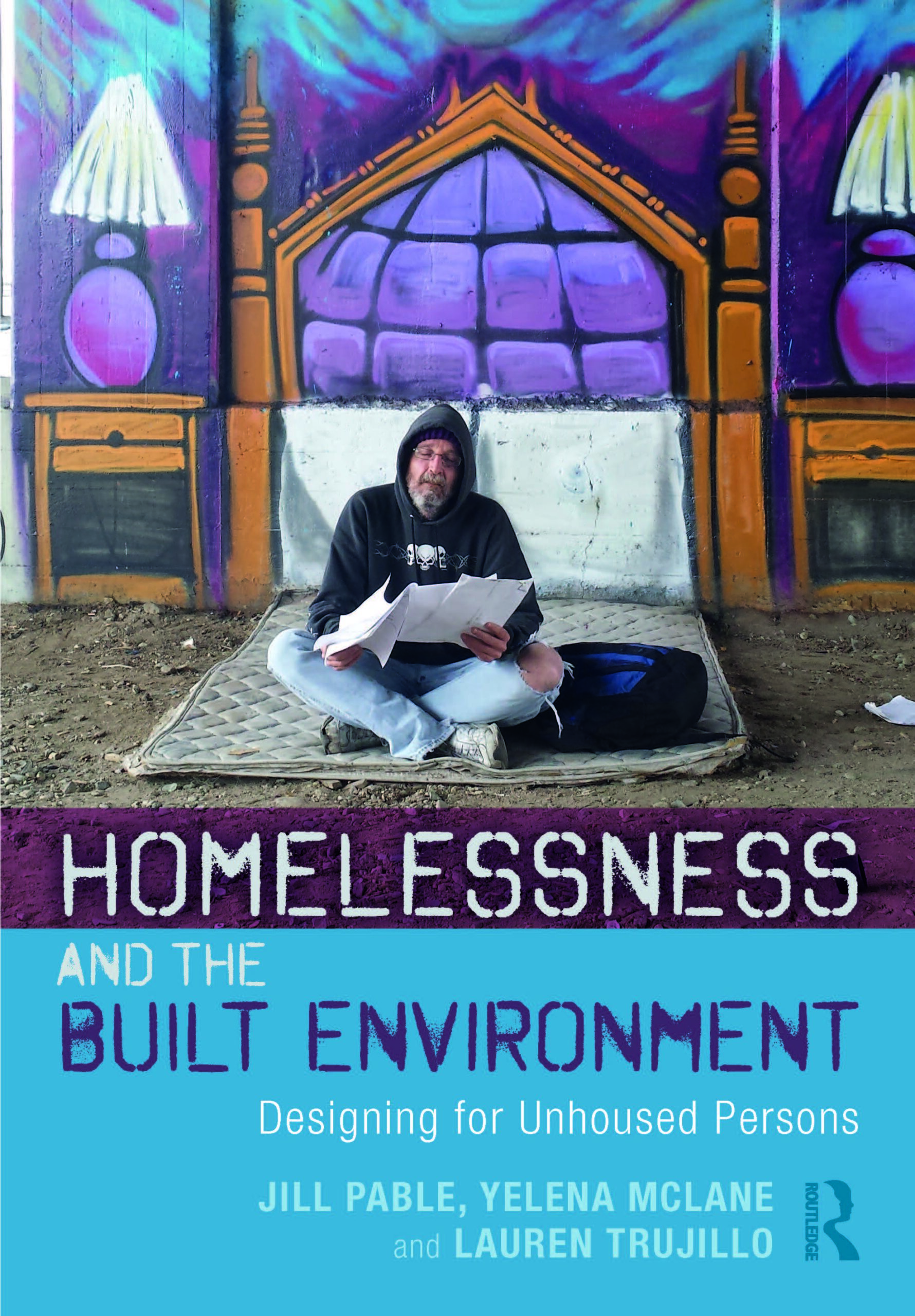
IAD Faculty Members and Graduate Alumni Publish Pioneering Book on Designing Spaces for Unhoused Persons

Homelessness and the Built Environment: Designing for Unhoused Persons. Routledge 2021.


Homelessness and the Built Environment: Designing for Unhoused Persons by IAD faculty members Jill Pable and Yelena McLane and graduate student alumnus Lauren Trujillo provides a practical introduction to the effective physical design of built facilities that assist unhoused persons. Arising at a time of emerging design-specific empirical studies in mental and behavioral environments to approach people’s needs, the book highlights the positive impact intentional design can have on human perception and how design influences people’s choices and actions.

“The presence of a growing body of research findings from psychology, environmental psychology, social work and other areas is starting to make clear the significant impact that built environments have on people’s perceptions,” says Pable.  The publication focuses on the inspiration behind the positive impact that physical design can have on people’s experiences. “Those perceptions can also include how people feel about themselves and other people. That seems particularly important if people have experienced a crisis or trauma recently, such as loss of one’s home.” 

“This book was written to introduce readers to the complexities and current practices of designing built environments to meet the needs of homeless persons,” says McLane. “It offers an historical overview of the subject and practical analyses of recent projects from North America, Europe, Australia, and New Zealand, which, in differing ways, assist unhoused person.” Within each chapter are also learning materials for educational use.  

The work addresses four main objectives: 

  1. Document architectural responses to homelessness in multiple countries, providing a means to effectively share approaches and ideas.
  2. Provide interior/architecture design practitioners a way to become informed and make decisions on applied building projects.
  3. Provide information to support organizations and policy makers confronted with the need to accommodate their municipality’s burgeoning unhoused population, describing practical strategies that support an effective architectural response.
  4. Inform design researchers and students who engage with this issue, providing necessary orientation and citation knowledge to leverage their work.

When asked how the book can help other professionals and students with their perspective in the design industry, McLane described that “we examined a range of design considerations including space planning, circulation and wayfinding, visibility, lighting, and materials and finishes within shelter, permanent supportive housing, and day centers. We hope that the book will become a reference for design students and professionals interested in this important social issue.” 


Jill Pable is a professor and chair of the Interior Architecture & Design Department at Florida State University. Her research focuses on the design of environments for people experiencing trauma and she leads Design Resources for Homelessness, a non-profit research communication organization at designresourcesforhomelessness.org. 

Yelena McLane is an assistant professor in the Interior Architecture & Design Department at Florida State University. She explores relationships between interior configurations and users’ experiences within spaces, and social influences upon these relationships. Her recent scholarship focuses on resident perceptions of community spaces in permanent supportive housing. 

Lauren Trujillo holds a BS and an MFA in interior design and has served as an adjunct instructor in interior design and art history at several colleges. She is a licensed interior designer in Florida and is a LEED GA. Her research interests include intercultural design and education. 

Homelessness and the Built Environment: Designing for Unhoused Persons was published by Routledge in July of this year, and is currently available here.  


IAD Welcomes Assistant Professor Terry Londy

Terry Londy

This year, Terry Londy will be joining Florida State’s Interior Architecture and Design Department, expanding the Department’s expertise into graphic design including publication design, wayfinding, and environmental graphics. Londy will be teaching the Design Foundations I course this year and is developing a new graphic design course for interested graduate students in Art, Art Education, Art History, Interior Architecture & Design, Theatre and Dance, which will debut in spring 2021.

“The Department of Interior Architecture & Design is excited to welcome new assistant professor Terry Londy to our ranks,” said Jill Pable, chair of IAD. “Mr. Londy’s previous practice experiences in environmental design and graphic design will lend wonderful richness to students’ understanding and project experiences, preparing them for the expectations of design practice in their careers. Tapping his knowledge in graphic design courses yet to come for the Department and the College of Fine Arts is an exciting prospect that will assist students of many backgrounds.”

Londy is a highly experienced graphic designer from Detroit and Chicago and has worked with firms including Forcade Associates, CallisonRTKL and Gensler. Previously, Londy served as an instructor at DePaul University, and his prior research explored the impact of social media and its impact on public interaction with a memorial in the Midwest. The College of Fine Arts asked Londy about his experience as a professional designer, working as a designer in academia and more.


CFA: What led you to seek an academic career in design?

Londy: As a professional, leading a team of designers and developing them has been something I have thoroughly enjoyed. The transition from the professional realm to academia will allow me to still develop and invest in others, but early in their design career in a much broader sense. The more prepared they are when they leave the better chance at their success. It’s amazing to watch others grow and flourish, especially when they are your students.

CFA: What has it been like to move from the Midwest to Florida?

Londy: It has been quite a change, but a great one in many ways. The pace of life here is much more relaxing, In Chicago, we have one speed…GO. Here, it is about enjoying what is around you. The heat is a bit of a shock, but I will not be shoveling snow anymore, I’m trading shovels for SPF 45.

Retail Entry Signage Design with CRTKL Dallas Team.

CFA: What contributions do you envision providing to students’ learning and projects?

Londy: Bringing a professional studio mindset to the classroom is a great way to set the tone for their career to come. I view my role as a collaborator more than anything, knowing it is all about developing professional skillsets and making the work shine together. I think building trust with the students is imperative. When they understand the feedback is about making their work stronger, you start to foster a lasting mentor/mentee-like partnership in their academic life. Having a design background in several disciplines including graphic design, interior design, furniture and fabrication, will help bring a unique style and fresh set of eyes to student work and their learning process.

CFA: What would you like your new and prospective students to know?

Londy: Design and learning should be fun. We are problem solvers and all of us love a good challenge, but at the root of it , we should be having fun… making things awesome. Everything we do is centered around people, the design, the interaction, and more importantly the relationships that can be built through the process of what we design. These relationships can be with designers collaborating, with the contractors putting everything together, with the client presentations, or even with the people interacting in the newly imagined space. We create a lasting bond, and this symbiosis is essential to our longevity. In all aspects leave them better than you found them. Make an impact in someone’s life.